
DR Congo’s Prime Minister Resigns, Government Dissolved
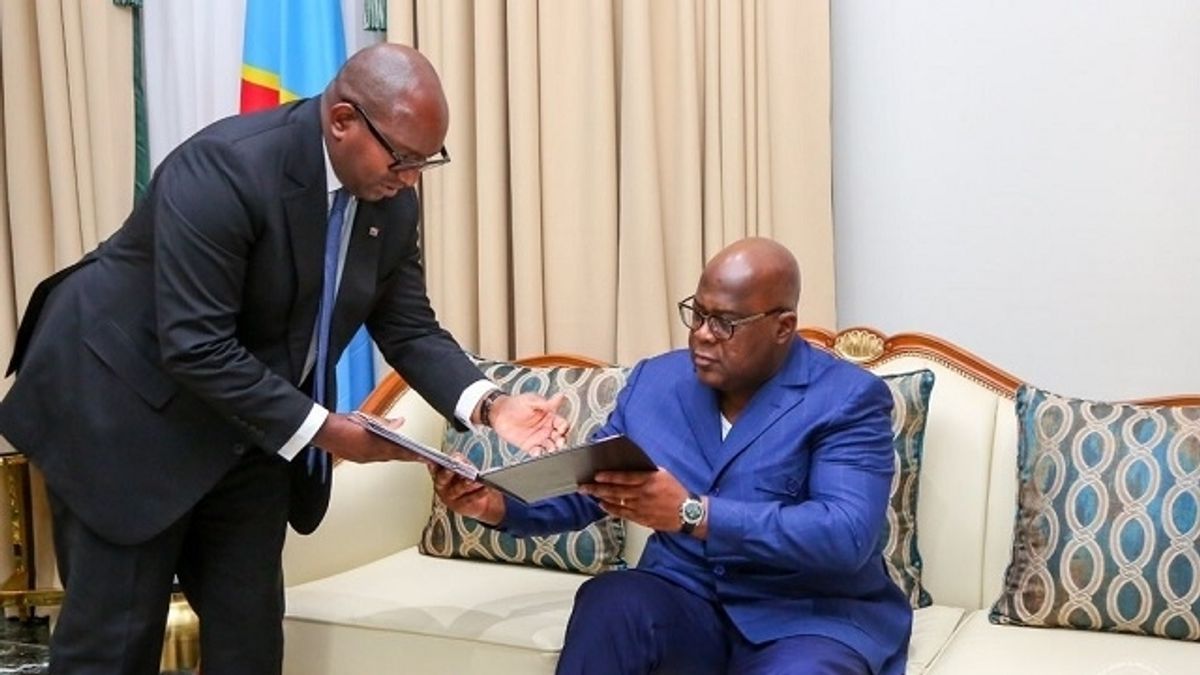

In the Democratic Republic of Congo (DR Congo), a significant political transition unfolds, marked by the resignation of Prime Minister Jean-Michel Sama Lukonde.
His departure, motivated by a new chapter in his political career as a national deputy representing Kasenga district, catalyzes the dissolution of the current government. This pivotal moment in DR Congo’s political landscape arrives amidst a backdrop of heightened regional tensions and international scrutiny.
The Catalyst of Change
Appointed Prime Minister in February 2021, Lukonde’s tenure was characterized by efforts to stabilize the nation and foster economic growth amidst challenges. However, the dance of democracy demands its due, leading Lukonde to resign following the validation of his mandate as a national deputy.
The law, maintaining a clear boundary between legislative and executive roles, necessitated this change, heralding the end of his government’s journey. In the interim, Lukonde and his cabinet have been tasked with managing the nation’s affairs, ensuring continuity until a new administration takes the helm.
A New Political Era
The recent elections, a watershed moment for DR Congo, saw parties aligned with President Felix Tshisekedi securing nearly 94% of the assembly seats, a testament to the shifting political currents. With provisional results in hand and the Constitutional Court’s confirmation pending, President Tshisekedi stands on the cusp of forming a new government.
This imminent political reconfiguration, set against Lukonde’s resignation, underscores a broader narrative of transformation and consolidation of power within the Tshisekedi administration. Amidst this political reshuffling, the international community watches closely, particularly as the United Nations Security Council imposes sanctions on six individuals linked to armed groups in the region.
The International Dimension
The DR Congo’s political transitions occur not in isolation but within a complex web of regional dynamics and international relations. The U.S. and France, voicing concerns over the escalating tensions, have urged Rwanda to cease its alleged support for the M23 rebels, underlining the intertwined nature of peace, security, and governance in the region.
These developments, coupled with the international community’s interventions, highlight the delicate balance DR Congo navigates as it strides towards stability and prosperity.
As the Democratic Republic of Congo turns a new page in its political annals, the resignation of Prime Minister Lukonde and the subsequent government dissolution herald a period of uncertainty and anticipation.
With the international community’s eyes firmly fixed on this central African nation, the stakes for a peaceful and prosperous transition have never been higher. Amidst this intricate tapestry of local aspirations and global interests, the DR Congo’s journey towards a new dawn continues, underscored by the resilience and hope of its people.
Crédit: Lien source

Les commentaires sont fermés.